
Acids and bases concept map
Acids and bases are chemical opposites that cancel each other out. This map links what defines each one to the pH scale that measures them and the neutralisation reaction between them.
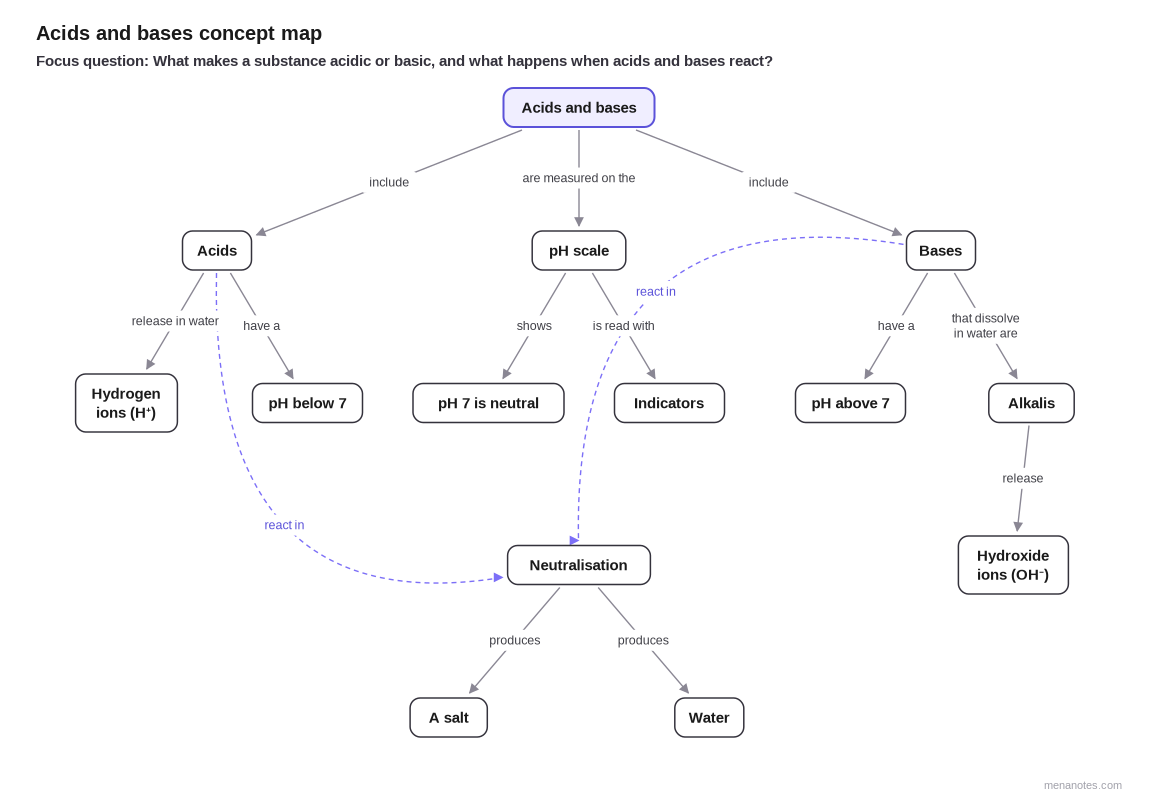
Read the map as sentences
Every arrow is a proposition. Read aloud, the map says:
- Acids and bases include Acids
- Acids and bases include Bases
- Acids and bases are measured on the pH scale
- Acids release in water Hydrogen ions (H⁺)
- Acids have a pH below 7
- pH scale shows pH 7 is neutral
- pH scale is read with Indicators
- Bases have a pH above 7
- Bases that dissolve in water are Alkalis
- Alkalis release Hydroxide ions (OH⁻)
- Acids react in Neutralisation
- Bases react in Neutralisation
- Neutralisation produces A salt
- Neutralisation produces Water
Acids and bases: what the map shows
An acid releases hydrogen ions (H⁺) in water. A base reacts with acids and neutralises them; a base that dissolves in water is called an alkali and releases hydroxide ions (OH⁻).
The pH scale runs from 0 to 14 for most everyday solutions. Below 7 is acidic, 7 is neutral and above 7 is alkaline. Each step is a tenfold change in hydrogen ion concentration, so pH 3 is ten times more acidic than pH 4. Indicators such as litmus or universal indicator change colour with pH.
In neutralisation, H⁺ and OH⁻ combine to make water, and the remaining ions form a salt: hydrochloric acid and sodium hydroxide give sodium chloride and water.
Common mistakes
- Not all bases are alkalis: only the soluble ones are.
- A lower pH means a stronger acidic solution, not a weaker one.
Make it your own
Drawing the map yourself is where the learning happens. Start from the focus question, list the concepts first, then link them with your own words. A blank concept map template gives you the boxes; the concept map guide covers the method.
Make and edit this map in Mena on iPad
Mena is a canvas app for iPad, iPhone and Mac, free to start. Paste this map in, rearrange it, add your own notes and sketches, and turn concepts into flashcards.
Get Mena on the App Store- Copy this map as text.
- In a Mena board, open More tools in the toolbar, choose Diagram from Text and paste. Each concept becomes a shape and each linking phrase a connector label.
- Drag concepts around, rename linking phrases and draw your own cross-links. Connectors stay attached when you move a shape.
- Export the finished board as PNG, SVG or PDF.
More concept map examples
-
 Chemistry
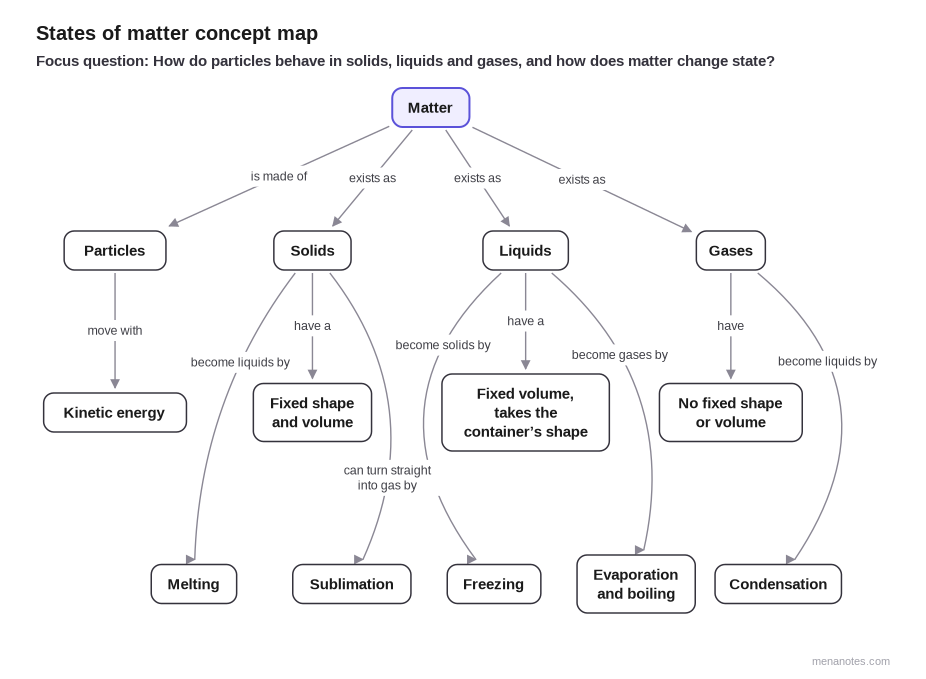
States of matter concept map
How do particles behave in solids, liquids and gases, and how does matter change state?
-
 Chemistry
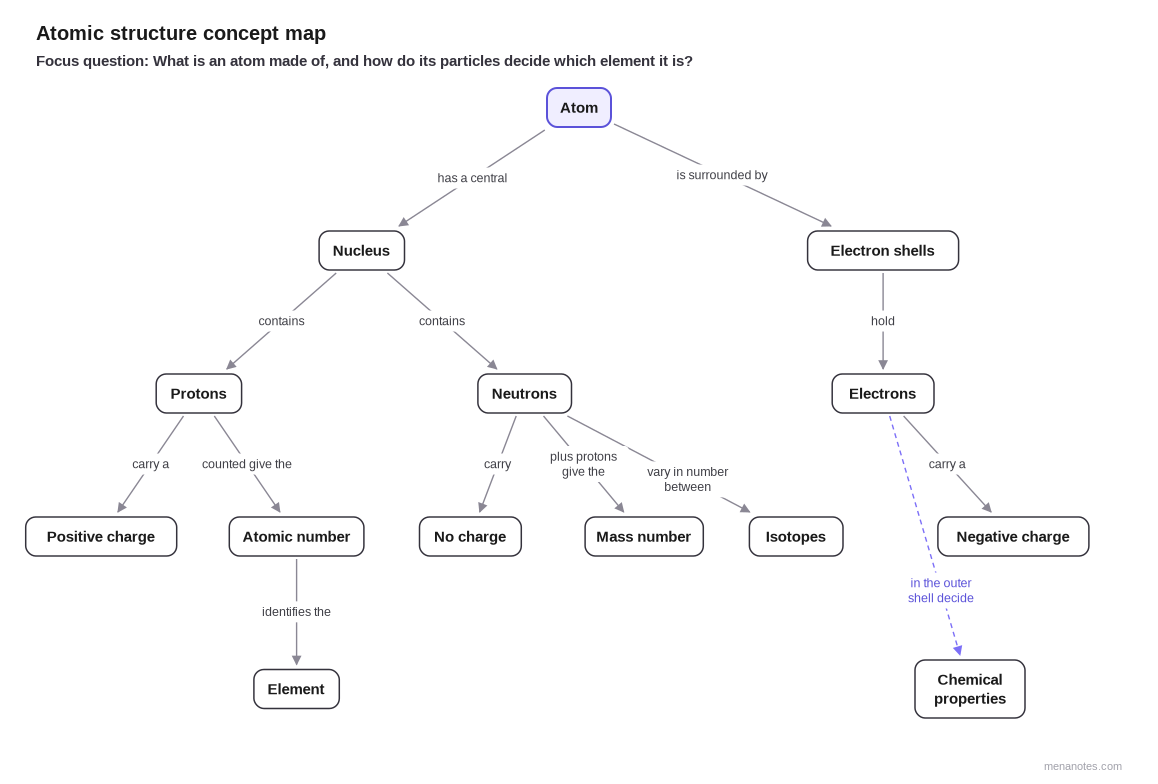
Atomic structure concept map
What is an atom made of, and how do its particles decide which element it is?
-
 Chemistry
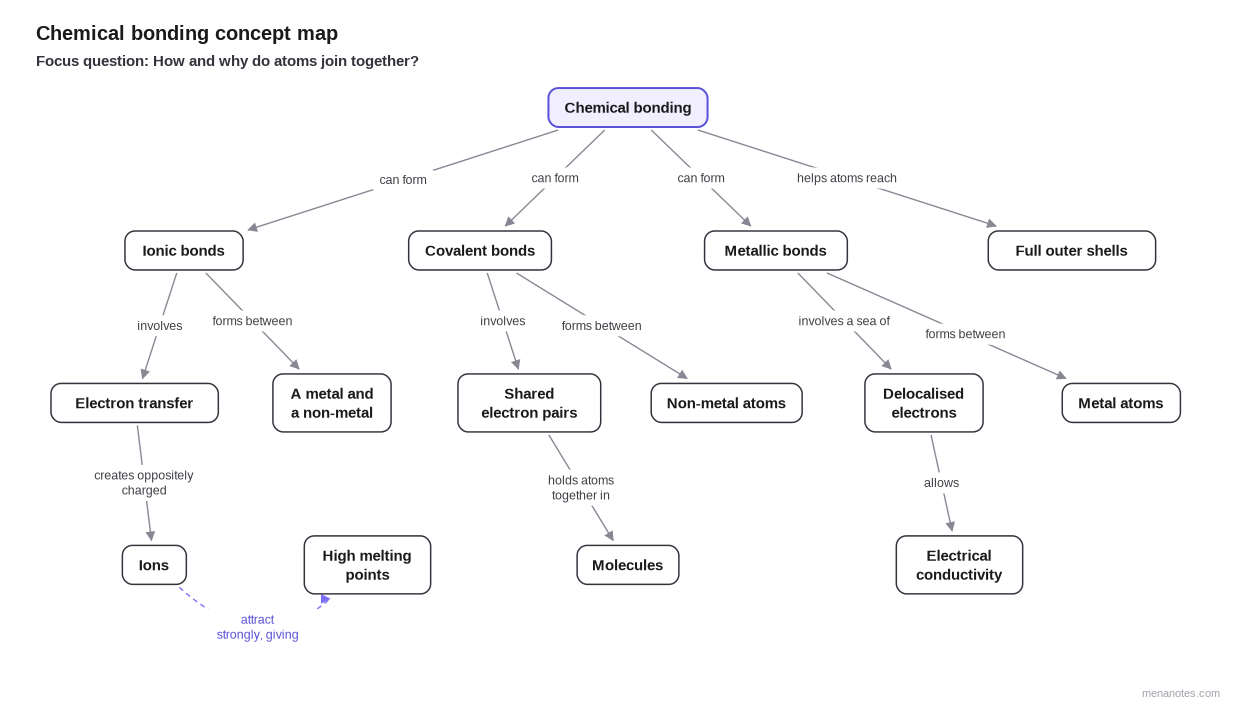
Chemical bonding concept map
How and why do atoms join together?